Old cars don't forgive bad light. Chrome is a mirror. Glass is a mirror. Even the paint, on a well-kept classic, has enough clear-coat depth to throw back whatever you point at it — including a photographer standing there with a light and a bad idea. The Retro Car Collection was six vintage cars in one afternoon, and every single one of them was, in its own way, an exercise in staying out of the reflection.
Reading the car before the light goes up
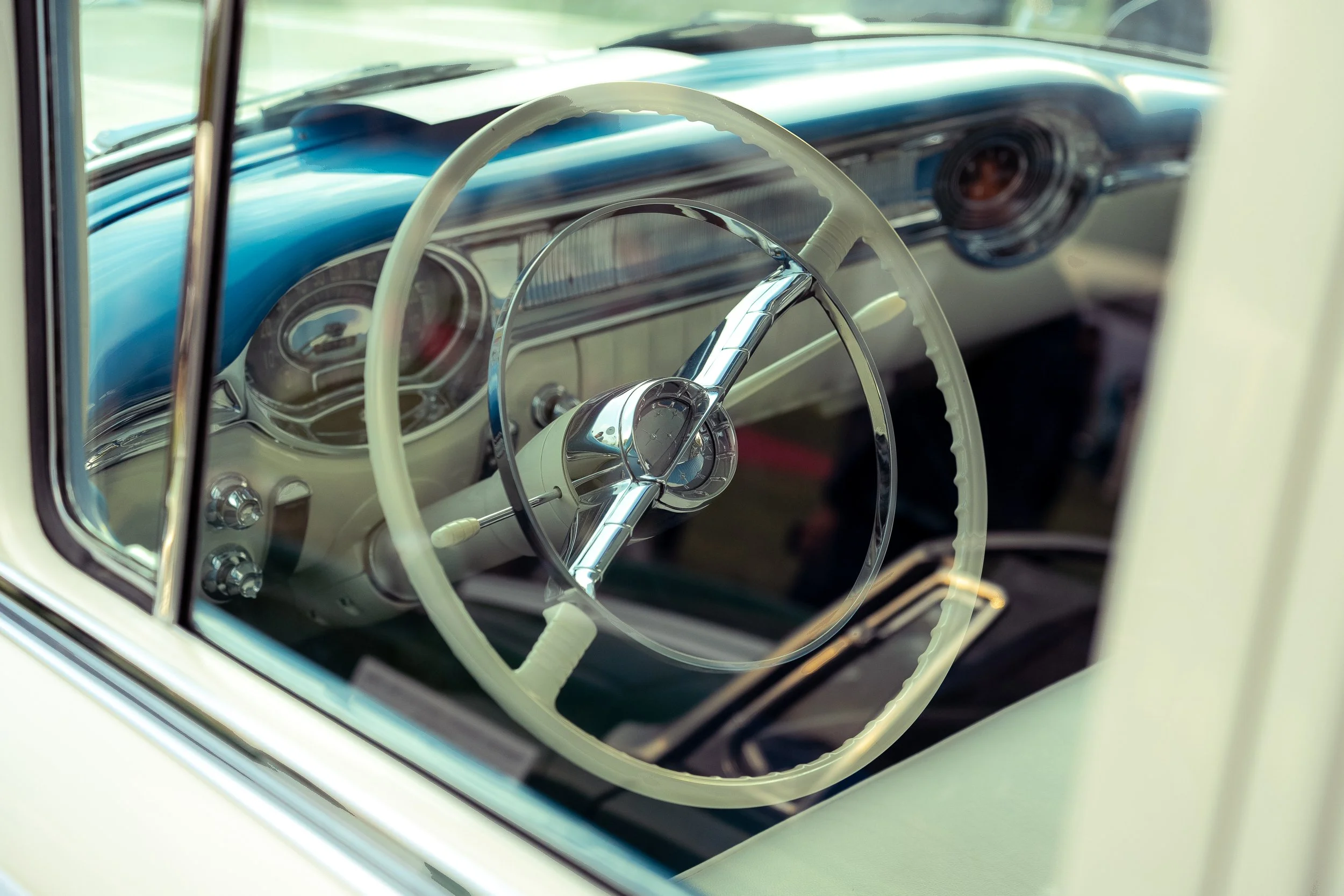
The blue-and-cream classic with the ivory steering wheel was shot through the open window rather than through the windshield — glass at that angle throws a specular hotspot straight back at a lens no matter how it's diffused, but an open window gives you the interior with none of the glare. The chrome horn ring still caught light, but as a controlled highlight along its curve rather than a blown-out streak.
The yellow classic was the opposite problem: its side glass was closed, and it was parked on a lawn with people standing around watching. Rather than fight that, we used it — the mirrored glass keeps the black wheel and chrome spokes sharp in the foreground while the lawn and onlookers soften into the reflection behind them, close to how the eye would actually take the scene in.
Interiors ask a different question
Dashboards are their own genre. The vintage sedan's round gauges and turquoise trim needed the chrome window surround to frame the shot without competing with it, so the key light stayed low and raked rather than head-on — enough to read the dial faces without turning the surrounding chrome into a second light source. The mint green convertible worked the same way: a large black steering wheel with a chrome hub badge photographs cleanly under raked light because the badge is small enough that even a tight highlight stays a highlight, not a flare.
Two cars, one golden hour
The red roadster and the yellow tourer were both shot as the light was dropping, and both benefited from it in different ways. The roadster's bonnet-top headlamps and chrome oval grille, shot head-on under a patterned canopy, got dappled light instead of flat light — texture on metal that flat midday sun would have erased. The tourer's radiator cap and blue Ford badge caught the sunset directly, warm light on a mesh grille that a studio setup couldn't fake without hours of gel work.
Chrome doesn't need more light. It needs the right light, from the one angle that doesn't put you in the shot.
Six cars, six different reflective surfaces, and the same underlying discipline each time: figure out what the metal and glass are already reflecting before adding anything to the frame. See the full Retro Car Collection.